- Homepage
- Jamaica
Jamaica Facts for Kids: Geography, Culture, Food and Wildlife
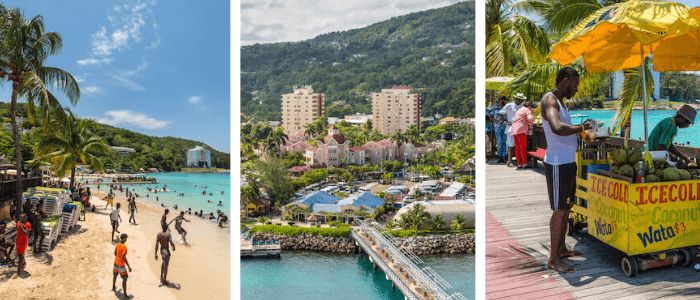 Jamaica Facts: stunning beaches, relaxed lifestyle and great food
 |
Jamaica is one of the largest islands in the Caribbean and has a population of almost three million people. Jamaica is known for coffee, cocoa and sugar plantations as well as the famous reggae music and amazing sandy beaches! |
Our fun Jamaica facts will help you learn more about one of the largest island countries in North America. Here we explain where the country is, who lives there and what makes this Caribbean island so special.
Now let's begin the journey with our popular snapbox!
 Jamaica - At a Glance
|
Our 'Jamaica Facts for Kids' page provides a quick facts overview of Jamaica as well as highlights on geography, people, culture, and wildlife. New teacher resources will follow soon. Enjoy!

This is what you will find on our page about Jamaica:
Jamaica Facts
Basic Facts for Kids
Here are some interesting Jamaica Facts which were chosen and researched by kids especially for kids.
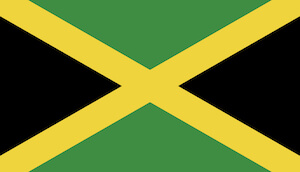
Flag of Jamaica- Continent: North America
- Area: 10,991 km²/4,244 sq miles
- Population: 2.8 million people live in Jamaica (2026)
- Capital: Kingston with about 600,000 inhabitants
- Government: Constitutional monarchy
- Motto: "Out of Many, One People"
- Languages: English (official), Jamaican Patois (patwa)
- Literacy: More than 89% of the people can read and write.
- Religion: mainly Christians (70%)

- Currency: Jamaican dollar
- National Symbols: red-billed streamertail (national bird), Guaiacum (national flower), green, yellow and black (national colours)
- National Anthem: "Jamaica, Land We Love"
- National Day: 6 August (Independence Day)
- History: Jamaica's first people were the Taíno, an Indigenous Arawakan people. The Spanish colonised the country after Christopher Columbus arrived on the island in 1494 and the Spanish began colonising Jamaica in the early 1500s. Jamaica belonged to Spain until 1655 when English forces led by Admiral William Penn and General Robert Venables captured the island from Spain. Jamaica then became a British colony. The British established many plantations, mainly for sugar, but cocoa and coffee were also grown already in the 17th century. Emancipation from slavery began in 1834 and slavery was finally abolished completely in Jamaica in 1838. On 6 August 1962, Jamaica gained full independence from the UK.
- Prime Minister: Andrew Michael Holness
- Monarch: Charles III
Jamaica Facts
Where is Jamaica?
Jamaica is an island country on the North American continent. Jamaica is an island of the Greater Antilles group in the Caribbean Sea.
The island of Jamaica is located about 145 km/ 90 miles south of Cuba and about 160 km/ 100 miles west of Haiti.
The capital city of Jamaica, Kingston, is located in the Caribbean at a distance of about 945 km/ 587 miles from Miami/ USA.
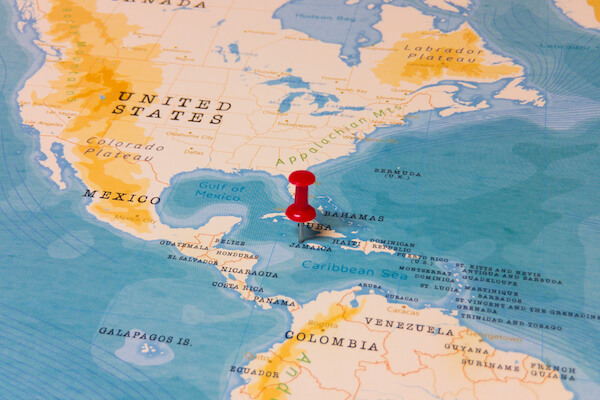 Location of Jamaica
Jamaica Facts
Geography
After Cuba and Hispaniola, Jamaica is the third-largest island in the Caribbean, after Cuba and Hispaniola, where the two countries Dominican Republic and Haiti are located.
The capital city of Jamaica is called Kingston. This city is located on the southeastern coast of the island at the foot of the Blue Mountains. The wider city area houses more than half a million inhabitants and this is the main economic center of the country.
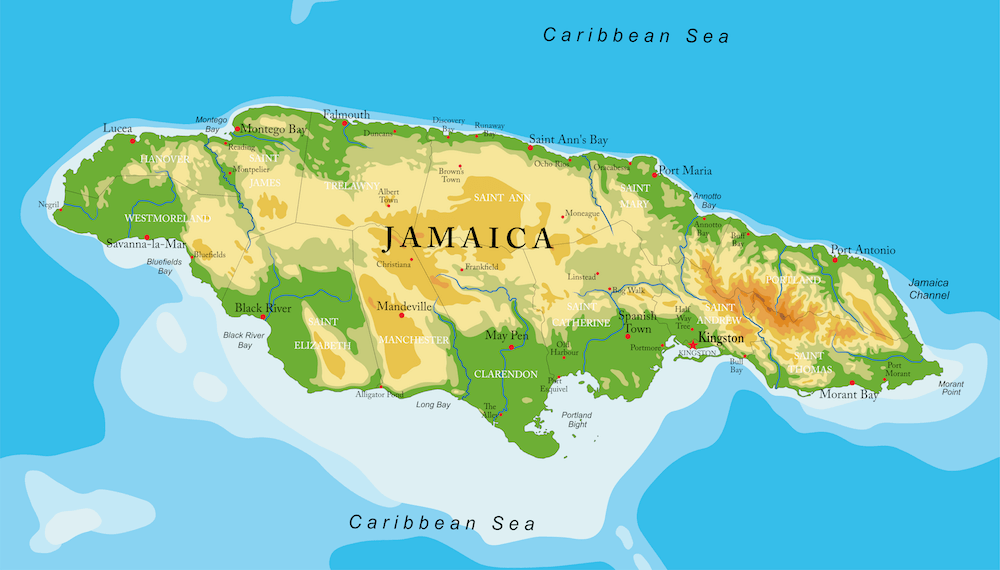 Map of Jamaica
The island of Jamaica is dominated by mountains with only a narrow band of coastal plains. Jamaica has a coastline of 1,022 km/ 635 miles and the country has many fabulous sandy beaches, cliffs and natural harbours.
Did you know
|
Jamaica is slightly smaller than the state of Connecticut/ USA or slightly smaller than Qatar or only about the third of the land area of Belgium.
A flight from London/ UK to Kingston/ Jamaica takes roughly 10 hours while a flight from Miami/ USA, which is about 945 km/ 587 miles from Kingston, takes less than two hours.
Jamaica Facts
Climate
Jamaica has a tropical climate with warm temperatures throughout the year. The coastal areas are mostly hot and humid, while in higher lying mountain regions the temperatures are generally more moderate.
Like many Caribbean islands, Jamaica is vulnerable to hurricanes, droughts, flooding and other effects of climate change. The island is located inside the Atlantic Ocean's hurricane belt and the hurricane season usually lasts from June to November. Almost every year, hurricanes bear down on the island and Jamaica experienced several mighty storms.
On 3 July 2024, Hurricane Beryl passed over Jamaica with torrential rains and strong winds and caused massive flooding along the southern coast. A national curfew was imposed as people had to flee into shelters to stay safe. Fortunately, hurricanes do not often strike Jamaica directly.
The most destructive and costliest storm of Jamaica's history to date was Hurricane Gilbert which hit Jamaica in September 1988. This massive storm caused widespread damage, destroyed over 100,000 homes and crops and more than 45 people lost their lives during this hurricane in Jamaica.
Jamaica Facts
Five Geo Superlatives
- Jamaica is the third largest island in the Caribbean - after Cuba and Hispaniola (Haiti and the Dominican Republic).
- Jamaica is the third most populous Anglophone country in the Americas. Anglophone means that the population speaks English as the first language.
- The capital city Kingston is not only the country's largest city, but it also houses the country's main container port.
- The longest river in Jamaica is Rio Minho with 92 km/ 57 miles.
- The longest mountain range in Jamaica are the Blue Mountains. The highest peak is the Blue Mountain Peak at 2,256 m/ 7,402 ft. The Blue Mountains and the John Crown mountains are currently UNESCO's only World Heritage Site in Jamaica.
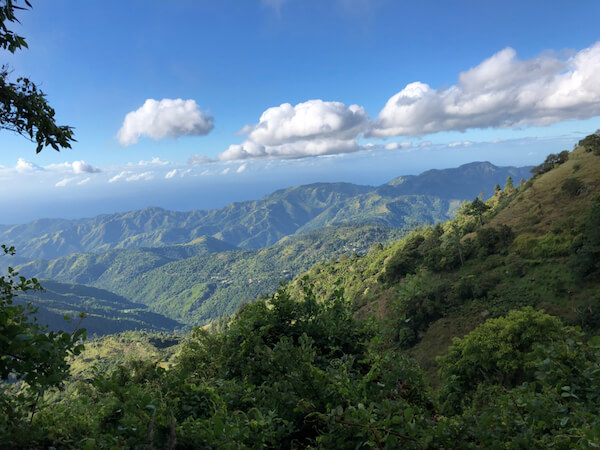 Blue Mountain in Jamaica
Jamaica Facts
Landmarks and Attractions
Let's start with the fabulous beaches. Jamaica is known for amazing beaches such as the seven mile beach in Negril or Doctor's Cave beach in Montego Bay (see below).
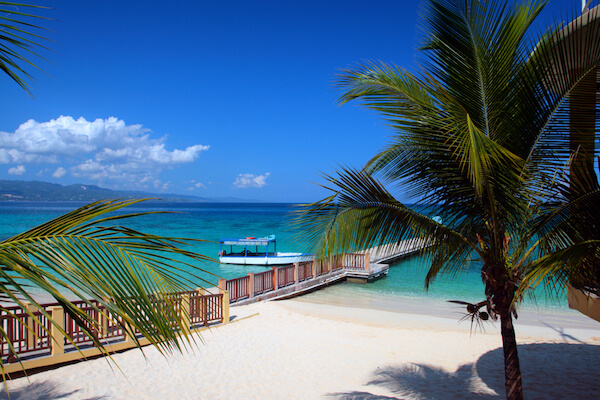 Doctors Cave Beach in Montego Bay
Among the largest towns in Jamaica are Kingston, New Kingston, Spanish Town and Montego Bay.
Port Antonio, Ocho Rios and Negril are among the most popular tourist destinations for its many activities such as swimming, snorkelling, diving, hiking or rafting. Many tourists in Jamaica enjoy boat trips, waterfall adventures or visits to explore caves and tropical forests.
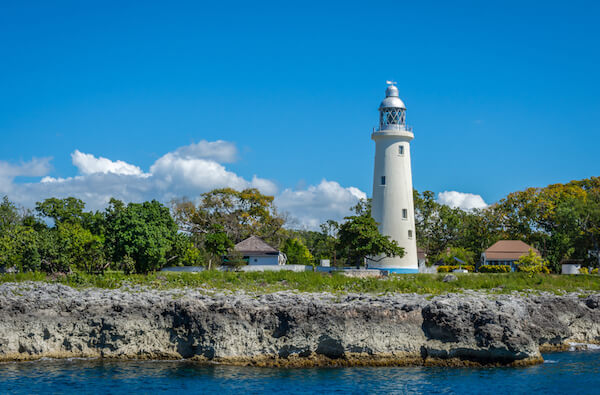 Negril Lighthouse is one of Jamaica's landmarks
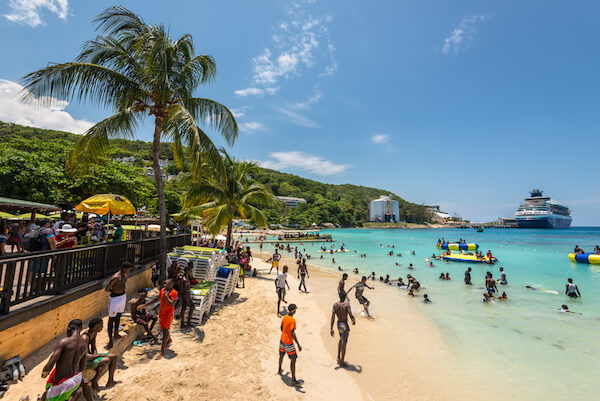 Ocho Rios
Jamaica also have many stunning waterfalls. While Reach Falls and YS falls are known for their tropical settings in the rainforests, Dunn's River Falls near Ocho Rios is probably the most famous natural landmark of the country. Here the water cascades flow over limestone terraces into the Caribbean Sea.
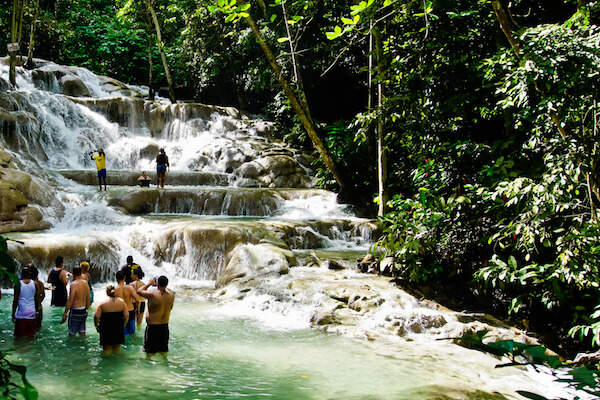 Dunn's River Falls
And here an intro to Kingston, the capital city of Jamaica (video by Tourism Jamaica - 25 minutes)
Jamaica Facts
People
Jamaica is home to about 2.8 million people. More than half of all Jamaicans (57%) live in the capital city and other urban areas.
The official language in Jamaica is English but Jamaicans speak a special English-based creole language, Jamaican creole. Almost all people are bilingual and fluent in English and Jamaican creole.
About 36% of the population is under 24 years old and about 14% of the youth age 15-24 years are unemployed.
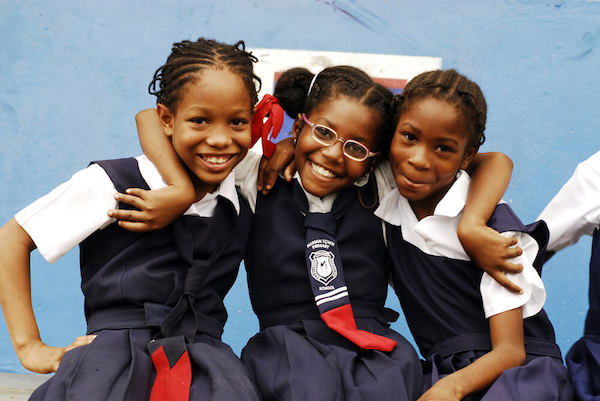 Jamaican girls in school uniform
The indigenous people of Jamaica are the Taíno or Yamaye people which are descendants of the Arawak people who originally came from South America and settled in the Caribbean.
Most of the Jamaican people can trace their descents back to the African continent, mainly Ghana and Nigeria. So the country's motto: "Out of Many, One People" is easy to understand.
Many people in Jamaica are Christians. The Rastafarian faith originates from Jamaica and is a movement since the 1930s. The Rastafarian movement is rooted in Christianity and focuses on the African origins.
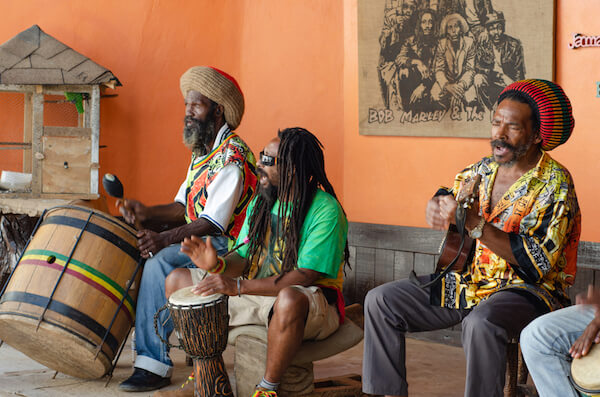 Reggae musicians in Jamaica - image by Lost Mountain Studio
Famous Jamaicans
- Louise Bennett-Coverley (1919 - 2006): famous Jamaican poet and activist, hailed as one of the national heroes.
- Samuel Sharpe (1801-1832) another national hero, he was the leader of the slave rebellion in 1831 that led to the abolition of slavery.
- Nanny of the Maroons (about 1686-1760): also nicknamed "Granny Nanny" was a famous revolutionary and fighter and is another one of the famous Jamaican national heroes. Read more about her here.
- Shelly-Ann Fraser-Pryce (born 1986): Olympian sprinter is one of the most revered and influential Jamaican women.
- Another famous Jamaican is sprinter Usain Bolt (born 1986), Olympic gold medalist and world record holder in 100m and 200m sprint.
- Bob Marley (1945-1981): considered the pioneer of Reggae music.
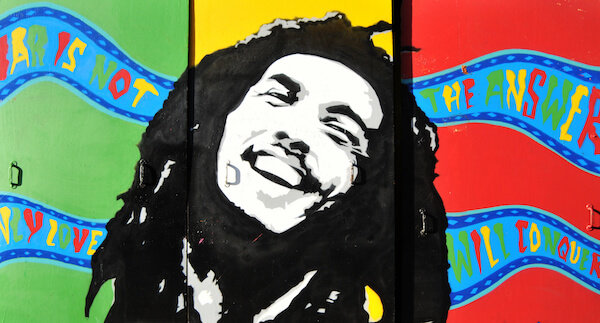 Bob Marley
Did you know?
|
However, as Jamaicans say, Reggae is not the only unique music genre that was born on the Caribbean island, there are in fact six music genres that originate for Jamaica. These six genres are called: Reggae, Ska, Mento, Dancehall, Dub and Rocksteady!
See here the fabulous intro to Jamaica by Pamela (official Visit Jamaica video - 30 seconds)
Jamaica Facts
Culture
|
|
The cultural traditions in Jamaica have been shaped by the African, European, Asian and Indigenous Taíno heritage of the island's population. Traditions are passed from one generation to the next by storytelling, music, dance and traditional foods. Jamaican folk traditions include colourful dances, drumming and songs and of course there are many unique celebrations throughout the year.
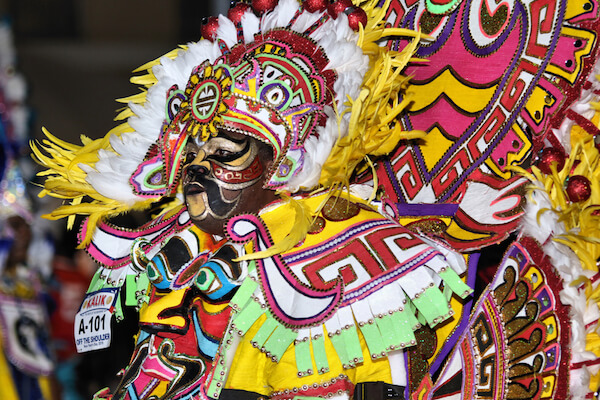
The Jamaica Carnival is held usually in April and is known for its colourful costumes, dancing and music. The carnival event includes a road march with several bands and music events and every year the carnival is held with a special theme.
In July, Reggae Sumfest is held in Montego Bay. The largest music festival of the Caribbeans includes famous reggae, dancehall and hiphop artists from Jamaica and around the world and also attracts visitors from every part of our planet. The next Sumfest will be held between 11 and 17 May 2027. Here is an excellent short intro to Reggae Music by Visit Jamaica (official - 3 minutes long)
One of the most important celebrations, however, is "Emancipendence". This is a week full of events around Emancipation Day on August 1 and Independence Day which is celebrated on August 6. Emancipation Day remembers the end of slavery in Jamaica, while Independence Day celebrates Jamaica becoming an independent country in 1962. The Emancipendence celebrations include games nights, music events, street parades and the spectacular Grand Gala which is held in Kingston.
Jamaica celebrates the nation's heroes, fabulous women and men who shaped the country with their actions and visions, on Heroes' Day which is a national holiday on the third Monday in October.
Jamaica Facts
Economy
In the 17th and 18th century, Jamaica was famous mainly for its sugar plantations. Sugar still is an important plantation crop and one of the major export products.
Jamaica is an important producer of bauxite and alumina. These minerals are used for the production of aluminium which is used in many objects such as cans, cars or airplanes.
Important export products are natural resources such as alumina and bauxite or agricultural products such as coffee, sugar and yams.
The main trading partner of Jamaica is the USA. The Netherlands, Canada and the UK are also important export partners.
The currency of Jamaica is the Jamaican dollar (JMD) and the highest value of a banknote is the $5,000 banknote.
Jamaica belongs to the British Commonwealth states, thus King Charles III of the UK is still the monarch as head of state. The king is represented in Jamaica by a Governor-General. However, Jamaica works on a referendum to decide whether Jamaica should become a republic with its own Jamaican head of state.
Jamaica Facts for Kids
Typical Jamaican Food
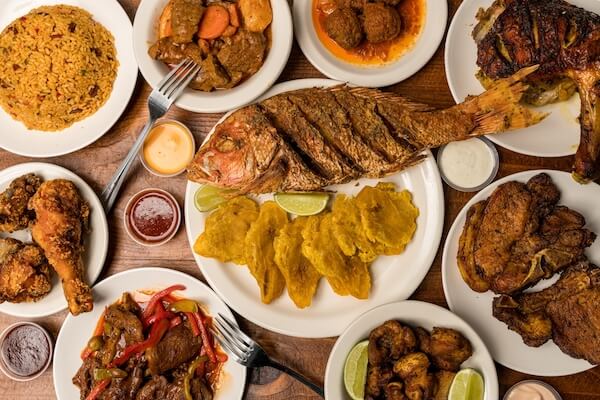
Cassava, bananas, coconuts, plantains, fruits and vegetables are the staple diet of the Jamaicans. Chicken, pork and beef as well as fish and seafood are also common and part of many popular dishes.
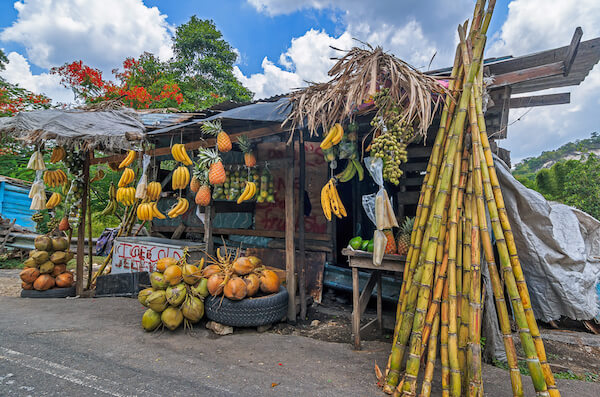 Fruit seller in Jamaica
Typical Jamaican food and drinks include:
- Ackee and saltfish: This fish or seafood dish is made with salted fish or seafood. Most often this dish is prepared with cod fish. This dish is made with the yellow ackee fruit and sautéed vegetables such as peppers and tomatoes, as well as various spices and herbs.
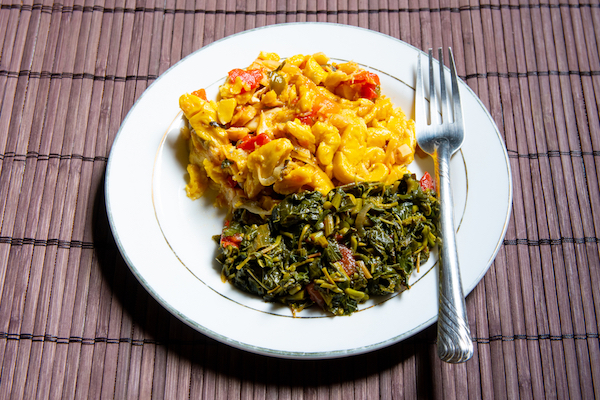 'Ackee and saltfish' and callaloo
- Callaloo: side dish made with sautéed leafy green vegetables such as amaranth or taro or water spinach
- Jerk chicken: made with chicken, pork or beef meat. Jerk is made with special spices such as garlic, ginger, cinnamon, cloves and pepper.
- Run dun: 'run down' is a fish stew made with onion, tomatoes, peppers and served most often with green bananas
- Bammy: deep fried slices of cassava, that have been dipped in coconut milk. Most often served with callaloo.
- Banana bread: sweet treat made with nutmeg, cinnamon and ginger and of course, ripe bananas
- Toto: small coconut cake, typical Jamaican dessert
 |
|
Jamaica Facts
Wildlife
Jamaica is home to many unique and fascinating animals, including the Jamaican iguana, Jamaican boa, Jamaican hutia and the colourful red-billed streamertail, also known as the doctor bird. The island’s forests, mountains, rivers and coastal waters provide habitats for many different species.
Jamaica is home to many unique and fascinating animals. There are the Jamaican iguana, the Jamaican hutia and the Jamaican boa. Wild boar and the small mongoose are common animal species in Jamaica.
The national bird of Jamaica is the red-billed streamertail, a hummingbird. This bird is also known as the doctor bird.
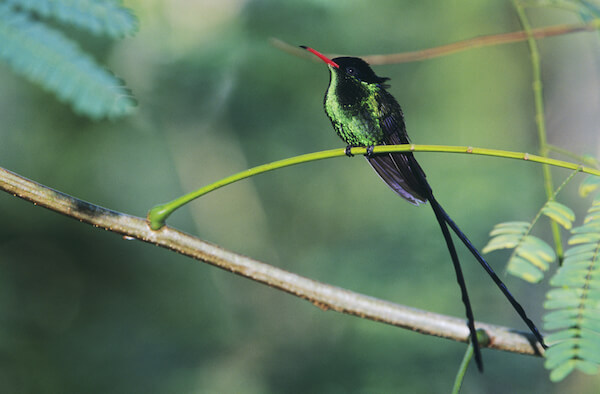 Red billed streamer bird - Jamaican national bird
Did you know?
|
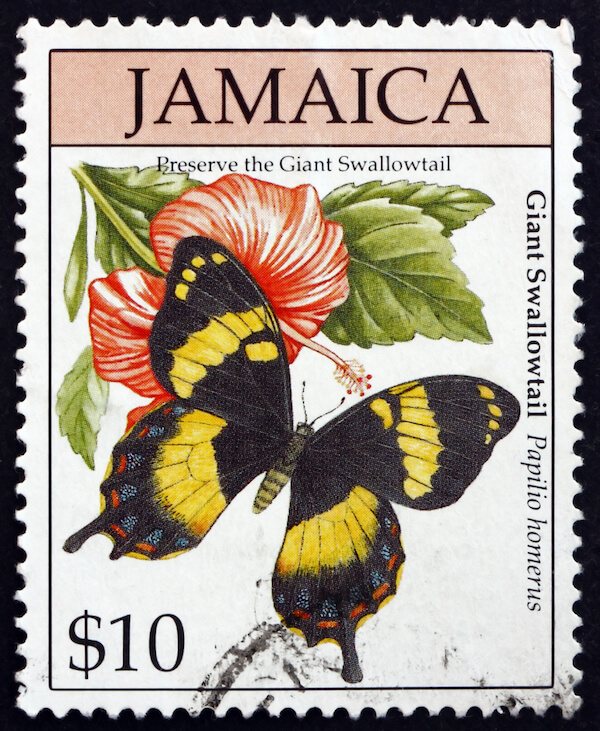
There are over 130 butterfly species in Jamaica, the largest butterfly species in the Western hemisphere is at home in Jamaica too. These butterflies are the Giant Swallowtail butterflies or papilio homerus (in Latin).
This swallowtail species is named in honour of the Greek poet Homer. The female butterflies are larger than males. Their wingspan reaches up to 15 cm/ 6 inches. These unique butterflies can best be experienced in the Rio Grande Valley in eastern Jamaica.
Amongst the least popular and dangerous animals in Jamaica are the fire corals, sand flees, "forty legs" (spiders), sea urchins and scorpion fish with spikes that can inflict nasty wounds.
Jamaica Facts for Kids
FAQs
Test your knowledge of Jamaica with the following 10 questions about Jamaica in our popular FAQs. They are easy enough to answer when you have read our page! Otherwise feel free to go back and read over the relevant sections above and try again. :-) Let's start and find out how many you can answer correctly!
Simply click on the arrow to read the answers.
Jamaica - Frequently Asked Questions
Where is Jamaica? Jamaica is an island country in the Caribbean Sea to the south of Cuba and to the west of Haiti. It is part of the Greater Antilles and on the North American continent.
What is the capital of Jamaica? The capital city is called Kingston. This city is located on the southeastern coast of the island.
Which language do people speak in Jamaica? English is the official language in Jamaica. However, many Jamaicans also speak Jamaican Patois (Patwa), a unique language that is influenced by English and West African languages.
Which is the highest point in Jamaica? Blue Mountain Peak is the highest point in Jamaica with 2,256 m/ 7,402 ft above sea level. The surrounding mountains are famous for producing the famous Blue Mountain coffee.
What is Jamaica's national dish? The national dish is ackee and saltfish. Ackee is a tropical fruit that is cooked with salted cod and often served with breadfruit, dumplings or plantains.
Which animals can you encounter in Jamaica? Jamaica has many fascinating animals: the Jamaican iguana, the Jamaican boa, the Jamaican hutia and red-billed streamertail, which is also known as the doctor bird.
What is Jamaica famous for? Jamaica is famous for reggae music, beautiful beaches, Blue Mountain coffee and famous sprinters such as Usain Bolt. Jamaica is the birthplace of reggae legend Bob Marley.
What are the national colours of Jamaica? Green, yellow and black!
What is the motto of Jamaica? The motto of Jamaica is "Out of Many, One People".
What is "Emancipendence"? "Emancipendence" is the name of the festivities that take place in Jamaica in August. The word refers to "emancipation" (which means here the end of slavery) and "independence". Emancipation Day is a public holiday on August 1 and Independence Day is another public holiday which is celebrated on August 6 in Jamaica. |
Jamaica Facts
Useful Resources
- Government of Jamaica. "Famous Jamaicans." Jis.gov.jm. Last accessed 2 October 2026.
- Jamaica Information Service. "Nanny of the Maroons." JIS. Last accessed 2 October 2026.
- Butterfly Identification. "Types of Butterflies in Jamaica" ButterflyIdentification. Last updated 21 September 2026. Last accessed 2 October 2026.
- Kylie Morrow. "44 Irresistible Foods & Drinks You Must Try When In Jamaica." Beaches.com. 18 March 2020. Last accessed 2 October 2026.
- Visit Jamaica. "Animals and Wildlife." Visit Jamaica. Last accessed 2 October 2026.
- DoBusiness Jamaica. "Why Jamaica." JAMPRO. Last accessed 2 October 2026.
Images on Jamaica facts page: shutterstock.com and own images; header images by byvalet/shutterstock.com; Musicians by Lost Mountain Studio/shutterstock.com
We hope you enjoyed reading our Jamaica Facts. Please bookmark this page and spread the word. We will add more information in the near future.
Popular Pages
 |
 |
 |
 |
Return from Jamaica Facts to Kids World Travel Guide Homepage
Competition
2026
Recent Articles


-
Jamaica Facts for Kids: Geography, People, Culture and Wildlife
Oct 02, 26 08:16 AM
Our Jamaica Facts for Kids will provide an overview of the Caribbean island nation, about Jamaican geography, people, culture animals, food and economy -
Facts about Tuvalu for Kids: Geography, People and Wildlife
Sep 11, 26 07:15 AM
Explore our facts about Tuvalu and learn about the Polynesian island nation and its geography, people, economy, culture and animals - Worksheets included -
Animals in Norway for Kids: Wildlife Facts
Sep 03, 26 10:50 AM
Animals in Norway explained: meet reindeer, moose, polar bears, whales and puffins, with habitat facts and a short quiz for class.
Recent Articles
-
Jamaica Facts for Kids: Geography, People, Culture and Wildlife
Oct 02, 26 08:16 AM
Our Jamaica Facts for Kids will provide an overview of the Caribbean island nation, about Jamaican geography, people, culture animals, food and economy -
Facts about Tuvalu for Kids: Geography, People and Wildlife
Sep 11, 26 07:15 AM
Explore our facts about Tuvalu and learn about the Polynesian island nation and its geography, people, economy, culture and animals - Worksheets included -
Animals in Norway for Kids: Wildlife Facts
Sep 03, 26 10:50 AM
Animals in Norway explained: meet reindeer, moose, polar bears, whales and puffins, with habitat facts and a short quiz for class.
More about the Americas
Test your Knowledge
Countries in
North America
More about Countries in
South America
Fun Facts
Fun Games

Competition 2026